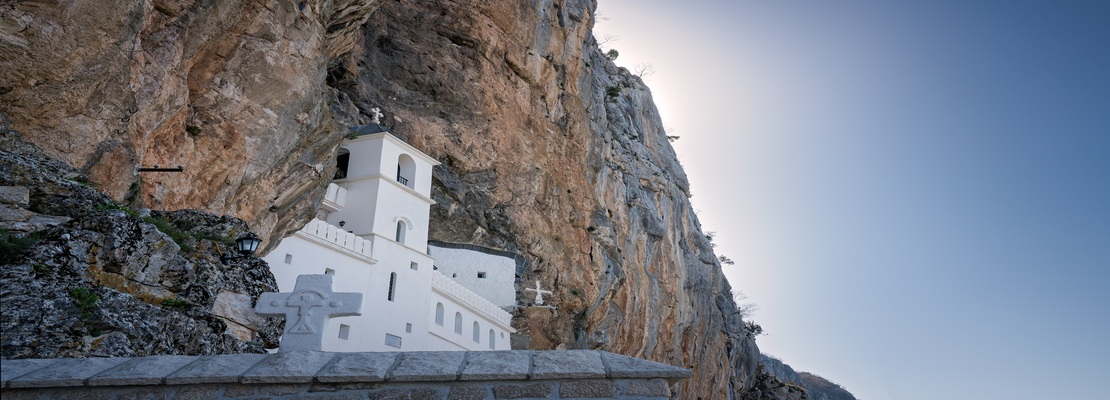
Ostrog Monastery – Montenegro’s Sacred Miracle in the Cliffs
Ostrog Monastery, built high on the vertical cliffs of Ostroška Greda, is one of the most important Orthodox pilgrimage sites in the Balkans — and one of the most visited Christian shrines in the world. Dedicated to Saint Vasilije of Herzegovina, who founded the monastery in 1665 and was later proclaimed a miracle-worker, Ostrog attracts millions of believers and visitors each year.
According to tradition, after his passing in 1671, a grapevine miraculously sprouted from the bare rock beside the place where Saint Vasilije died — despite the absence of soil. Many believe that the fruit of this vine brings blessings to couples struggling with infertility. This is only one of countless miracles attributed to the saint, whose relics are preserved in the monastery.
Today, Ostrog is not only a place of Orthodox worship but a spiritual refuge visited by people of all religions seeking peace, healing, and inspiration.
The Upper and Lower Monastery
Upper Monastery (Gornji Manastir)
Dramatically carved into sheer rock at 900 meters above sea level, the Upper Monastery overlooks the vast Bjelopavlići plain. Built partly inside natural caves, it includes two remarkable churches founded by Saint Vasilije:
- Church of the Presentation of the Holy Mother of God – the cave church where the saint’s incorrupt relics are kept.
- Church of the Holy Cross – located on the upper level, featuring frescoes painted by the iconic artist Radul, who adapted his work to the natural shapes of the stone walls.
The entire space exudes an atmosphere of sacredness, simplicity, and timeless endurance.
Lower Monastery (Donji Manastir)
Built in the 19th century, the Lower Monastery consists of:
- Church of the Holy Trinity
- Monastic living quarters
- A religious school dating back to the 18th century
Today, this part of the complex is the center of liturgical life, hosting regular services, baptisms, weddings, and spiritual gatherings.
A paved 5 km road connects the Upper and Lower Monasteries, but many visitors choose the shorter 25-minute forest footpath, experiencing the traditional pilgrim route as countless generations did before.
A Symbol of Faith, Heritage, and Montenegrin Identity
More than an architectural wonder, Ostrog is deeply woven into Montenegro’s cultural and spiritual identity. It reflects centuries of resilience, devotion, and tradition — standing as a testament to the people who safeguarded their faith even in the harshest times.
Visitors often describe the monastery as a place where nature, history, and spirituality merge into a uniquely powerful experience.
Tour Route to Ostrog Monastery
Your tour begins from a location that best suits you. We travel in a modern, air-conditioned luxury van, following one of the scenic routes through Montenegro:
- via Cetinje and Petrovac Mountain, or
- through the Sutomore/Sozina tunnel
We continue toward Podgorica and then follow the Podgorica–Nikšić main road before turning onto the mountain road leading to Ostrog. This stretch offers stunning views of the Bjelopavlići plain, the Zeta River, and the dramatic landscape surrounding the monastery.
We park at the Lower Monastery and continue on foot toward the Upper Monastery — a short, pleasant climb.
Upon reaching the Upper Monastery, you will:
- Visit the relics of Saint Vasilije
- Explore both cave churches
- Hear stories about the miracles associated with the monastery
- Enjoy panoramic views of the surrounding region
After the visit, we return to the Lower Monastery, where you can rest, take photos, or explore the grounds at your own pace.
Every tour is flexible and can be adapted to your interests, making your visit to Ostrog a meaningful and unforgettable experience.